Add Row
Add Element
cropper
update
Trade Talk London
update
Add Element
  • Home
  • Categories
    • Home & Property Care
    • Design & Inspiration
    • Sustainable Living
    • Smart & Connected Homes
    • London News
    • Homeowner Tips
    • Construction & Property News
    • Property Investment & Strategies
  • Business Spotlights
August 19.2025
3 Minutes Read

McLaren’s Bold £100m LSE Redevelopment: A Sustainable Step Forward

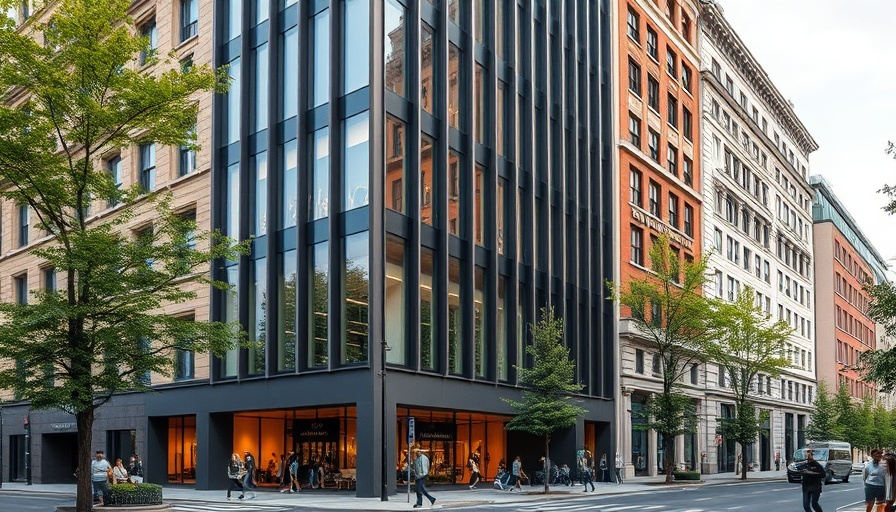
Sustainable construction in London: modern building facade in historic setting.

McLaren's £100m Redevelopment: A New Era for Sustainable Design

In a significant move for sustainability and architectural innovation, McLaren Construction has been awarded a £100m contract to transform the London School of Economics (LSE) flagship site at 35 Lincoln’s Inn Fields into the Firoz Lalji Global Hub. This ambitious retrofit aims not only to revitalize a 1950s building but also to set new standards in sustainable architecture with its focus on Passivhaus principles and circular economy practices.

Building Beyond Bricks and Mortar

The design, by esteemed architects David Chipperfield, retains approximately 60% of the original structure, showcasing a commitment to resource efficiency. By demolishing the top three floors and adding a lightweight cross-laminated timber extension, the total space will increase from 9,856 square meters to an impressive 11,848 square meters. This endeavour aligns with modern desires among London's young homeowners, who increasingly value eco-friendly renovations and retrofits over new builds.

A Cornerstone of Community and Education

More than just an architectural undertaking, the Firoz Lalji Global Hub will house cutting-edge educational facilities for the LSE, including the Institute for Africa, new classrooms, seminar rooms, and enhanced university amenities like a café and outdoor terrace. Young homeowners in London, who often see their homes as both functional and educational sanctuaries, will appreciate how this new hub aligns with their lifestyle aspirations of learning and community engagement.

Innovative Sustainability Standards at Play

The project strives for several prestigious certifications, including BREEAM Outstanding, Passivhaus, and WELL Platinum. These targets reflect an urgent trend in London towards buildings that not only minimize carbon footprints but also enhance inhabitants' health and well-being. Local property owners focusing on sustainability will find it motivating as it showcases the positive impact that renovations can have on community and environment.

Community Impact and Local Benefits

Julian Robinson, director of estates at LSE, emphasizes that this redevelopment is transformative, aiming to increase adaptability for future generations. Furthermore, the project has incorporated strategies to minimize embodied carbon, through methods such as salvaging materials for reuse, including flooring, lighting fixtures, and even bricks from nearby sites. Young, eco-conscious homeowners will resonate with these practices, enhancing their home's value while promoting a sustainable lifestyle.

Elevating the Aesthetic Amid Conservation

Situated in the Strand Conservation Area, the external appearance of the redeveloped building will maintain architectural integrity while refreshing the façade with a lime-based off-white wash. It's these subtle yet meaningful adaptations that reflect the balance between tradition and modern innovation—an ethos that resonates with many who cherish London’s character while seeking contemporary living standards.

Conclusion: Make Your Voice Heard

This redevelopment isn't merely about erecting a new building; it’s a beacon of how architectural foresight can support sustainability within our communities. Young homeowners can advocate for similar initiatives within their neighborhoods, suggesting practices and projects that respect both the environment and the rich tapestry of local heritage. By engaging in these discussions, you contribute to a future that aligns with sustainable living goals while reinforcing community bonds.


Sustainable Living

0 Comments

Write A Comment

*
*
Related Posts All Posts

Discover How Solar Panels on Flat Roofs Can Save You Money

Update Understanding Solar Panels for Flat Roofs: Are They Practical? As the green energy revolution continues to gain momentum, young homeowners in London are increasingly eager to invest in sustainable living solutions, with solar panels at the forefront of their home improvement projects. A common question arises: Can you install solar panels on a flat roof? The short answer is yes, and in many cases, it's a great choice! Flat roofs, which are typical in urban settings, offer unique advantages for solar panel installations when combined with proper planning and the right equipment. The Transition to Solar Energy: An Informed Choice Installing solar panels is no longer purely a financial investment; it’s also a lifestyle choice that promotes sustainability. As awareness grows about the impact of climate change, homeowners are turning to solar energy not just for potential savings, but as a commitment to reducing carbon footprints. The UK government also offers various incentives for homeowners, including the Feed-in Tariff scheme, which allows you to sell surplus electricity back to the grid, making solar panels a savvy economic move. Why Install Solar Panels on Flat Roofs? While traditionally slanted roofs are seen as ideal for solar installations due to their natural angle, flat roofs can be tailored to optimize energy production. According to industry experts, the ability to position and tilt solar panels optimally is a significant benefit of flat roofs. Moreover, flat roofs can be accessed more easily, reducing installation risks and associated labor costs. Exploring Mounting Options for Flat Roof Solar Systems Flat roofs afford flexibility in mounting systems—meaning homeowners can choose how best to utilize their space. Here are some common options: Ballasted Mounts: These systems use heavy weights to secure panels without penetrating the roof, minimizing the risk of leaks and roof damage. East/West Mounting: This approach places panels facing east and west rather than solely south. By capturing sunlight during both morning and evening hours, this configuration maximizes energy production, particularly in urban settings. Console Bins: Also known as tray mounts, these are a cost-effective and quick-installation option that keep panels at an angle. Pros and Cons: The Flat Roof Perspective As appealing as it might sound, using flat roofs for solar installations is not without its challenges. Flat roofs offer significant aesthetic advantages, as panels are less visible from street level, maintaining the visual appeal of the property. However, they also pose some challenges, such as ensuring panels are tilted appropriately to avoid water pooling, dirt build-up, and to maintain energy efficiency. Moreover, not all solar panel installers are equipped to handle flat roofs, a situation that may complicate your efforts. Selecting a reliable installer is crucial, as improper installation can void warranties, compromising your investment. Consideration for Future Predictions Looking ahead, the solar technology landscape is rapidly evolving. As energy prices fluctuate and the demand for sustainable solutions increases, homeowners will likely find solar panels even more economically viable in the future. The growing availability of advanced solar technologies will also improve installation practices, making flat roofs an increasingly attractive option for solar energy generation. Actionable Insights: Making the Leap to Solar For young homeowners ready to embrace solar energy, here are a few actionable steps to consider: Consult Professional Installers: Reach out to vetted solar installers who specialize in flat roofs to obtain quotes and advice. Calculate Potential Savings: Assess how much you could save with solar over time compared to your current energy costs, factoring in potential government incentives. Maintain Your Installations: Once installed, ensure regular maintenance to keep your system in good working order, enhancing efficiency and lifespan. The journey towards sustainable living is filled with options and opportunities. By considering solar panels for your flat roof, you're not only investing in your home but also participating in a larger movement towards a greener planet. If you're a homeowner in London, don't let a flat roof deter you from exploring solar energy. The benefits far outweigh the challenges when planned thoughtfully. For further information on getting started with solar panels, reach out to your local solar energy experts.

Support for the Cement Sector: A Path to Sustainable Living in London

Update A Concrete Future: Supporting the Cement Sector The UK cement sector is at a pivotal juncture. Recently, Construction Minister Chris McDonald passionately addressed the House of Commons regarding the urgent need for governmental support in decarbonising cement production. In a debate sparsely attended by fellow MPs, he outlined a vision not just for an environmentally friendly future but also an economically prosperous one. Understanding the Need for Decarbonisation Cement production is a major contributor to carbon emissions, and as society moves toward sustainability, the pressure grows to innovate. John Whitby, Labour MP for Derbyshire Dales, brought attention to the Peak Cluster initiative which aims to connect various carbon capture sites through a pipeline network. Whitby asserted the need for a “clear route to market” for carbon capture projects, which would enhance investor confidence and stimulate growth in the sector. The Minister noted that over 11 million tonnes of cement were consumed in the UK last year, with just 7 million tonnes produced domestically. This gap—approximately 30% reliance on imports—represents not just an economic loss but an opportunity for growth in local production. Policy Changes on the Horizon McDonald emphasized the importance of legislative changes, including mandatory embodied carbon reporting for construction materials. This initiative targets a standardized approach to emissions reporting, making it easier for businesses to comply and encouraging the use of lower-carbon materials. Mandatory reporting is designed to drive demand for innovative technologies, enabling wider adoption and investment in the green cement industry. The Economic Potential The discussion also encompassed the economic implications of reinvesting in domestic cement production. If the UK produced what it currently imports, projections estimate the need for a 50% increase in production capacity, potentially resulting in 750 new jobs and nearly £170 million in gross value added for the economy. McDonald noted that low-carbon cement production, akin to practices seen in Norway, could present new market opportunities. The Norwegian Brevik cement plant, for example, has successfully integrated carbon capture technology and sold out its low-carbon cement within the first half of 2025, demonstrating the market demand and financial viability of sustainable practices. Moving Towards a Sustainable Future As part of a broader strategy for re-industrialization, the government’s proposed carbon border adjustment mechanism aims to equate the carbon price of imported cement with UK-produced goods. This initiative is designed not only to protect local industry but to instill confidence in investment prospects. With the reported consultations on an embodied emissions framework underway, encouraging businesses and consumers to make informed choices about the materials they endorse is fundamental for driving change across the sector. Conclusion: A Call to Action For young homeowners and local communities in London, the developments in the cement sector hold promising implications. By supporting policies that promote sustainability, homeowners can contribute to a greener future while enjoying the benefits of innovative construction practices that prioritize building with integrity and ecological mindfulness. It’s time to engage with your local representatives and advocate for sustainable policies in the construction sector. Together, we can build a concrete future that benefits our communities and the environment.

How Creating a Knowledge Commons Enhances Sustainable Living

Update Building a Knowledge Commons for Sustainable Living In the evolving landscape of sustainable living, the creators of Lowimpact.org have embarked on a bold new journey—transitioning the focus from mere sustainability to establishing a vital knowledge commons. This shift underscores the need for a paradigm that transcends the limitations of traditional economic and political systems, drawing on the power of community collaboration. Why Commons Matter Now More Than Ever The concept of commons is not new, as it echoes ancient practices where resources were shared rather than hoarded. Yet today, as corporate interests and state power seek to enclose essential resources—from housing to data—communities are being encouraged to reclaim and co-create these assets. The emphasis is on developing a resilient alternative economy, fostering mutual support systems where neighborhoods can collectively provide for their needs, thus circumventing reliance on existing, often oppressive economic structures. Learning from Existing Initiatives Across the UK, various grassroots movements highlight the potential of community-led systems. For instance, in Stroud, local residents are pioneering a housing commons, repurposing neglected properties into accessible homes. Similarly, Liverpool's mutual credit system is redefining financial interactions, ensuring that services benefit the community rather than external investors. These initiatives are replicable and serve as case studies for aspiring commoners across London. Utilizing Technology for the Movement Lowimpact.org plans to harness modern technology to fortify this commons movement. By utilizing tools such as wikis, they are creating an engaging platform where experts and community members can collaboratively curate knowledge about various topics—from renewable energy to sustainable agriculture. This initiative not only democratizes information but also empowers individuals to contribute actively to their communities. The Role of Grassroots Networking At its core, fostering a knowledge commons is about relationships. It’s the connection between local citizens who are eager to share their experiences and learn from one another that drives real progress. As mentioned in studies of other successful commons movements, including participatory budgeting initiatives, the collective realization of needs combined with sustained community engagement allows for unique solutions tailored to specific local contexts. By sharing stories, tips for sustainable living, and feedback, the community collectively builds not just resources, but also trust and cohesion. Future Predictions: A Shift in Community Dynamics The next few years may see a significant reframing of how communities engage with their surroundings. As urban environments evolve, more individuals might choose to participate actively in the formation of commons that address their needs, prioritizing local well-being over corporate interests. Should this trend continue, we might witness a profound shift in societal values towards localized solutions for housing, food, and climate resilience. Taking Action: Become Part of the Commons Movement For young homeowners in London interested in home improvement and sustainable living, engaging with the knowledge commons could be particularly rewarding. Whether you're looking to learn about maintaining an eco-friendly household, seeking out community-supported agriculture options, or getting involved in local sustainable projects, the emerging framework is designed to enable grassroots changes that reflect real community needs. In Conclusion: The Importance of Collective Action As we look forward to this new phase of Lowimpact.org and the broader commons movement, it’s clear that community-driven initiatives are crucial for a sustainable future. These efforts remind us that sustainable living is not just about individual choices, but about building an inclusive environment where everyone can contribute, thrive, and support one another in meeting their shared challenges. Together, we can redefine our systems and create powerful alternatives to the corporate-driven landscape. If you want to be part of this exciting journey towards a communal future, consider how you can contribute to the knowledge commons in your own neighborhood. Join local initiatives, share knowledge, or start a project that brings people together for sustainable action, making your community stronger and more resilient.

Terms of Service

Privacy Policy

Core Modal Title

Sorry, no results found

You Might Find These Articles Interesting

T
Please Check Your Email
We Will Be Following Up Shortly
*
*
*